Read the visual description
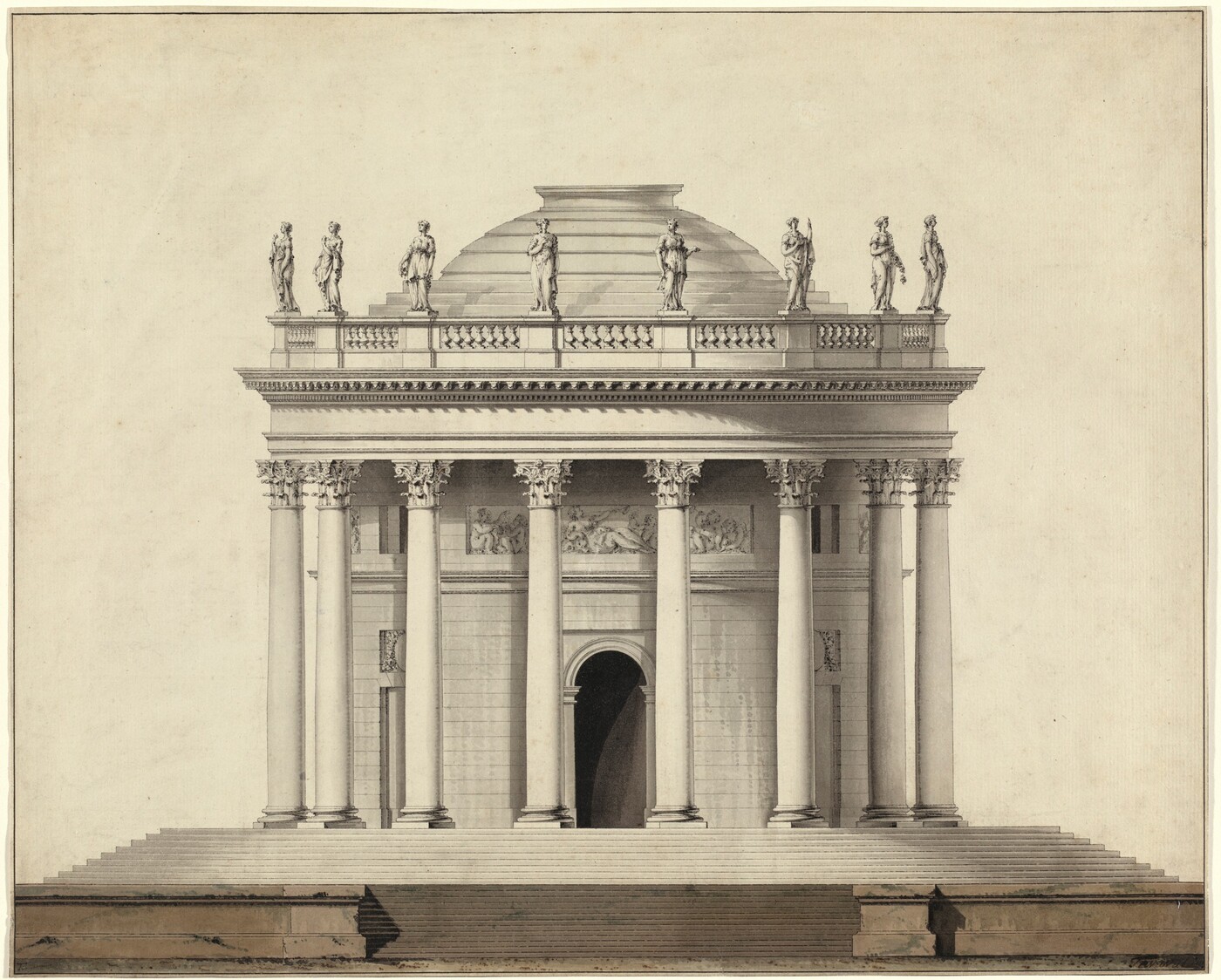
This is a drawing of a neoclassical architectural structure. The structure features a grand domed building elevated on a series of broad steps, with tall Corinthian columns supporting an entablature that is decorated with relief sculptures. Above the entablature, there is a balustrade adorned with statues standing at intervals. The building's entrance is centrally located at the top of the stairs, marked by a large arched doorway. The drawing emphasizes symmetry and balance, with a focus on geometric shapes and classical architectural elements such as the detailed columns and sculptural decorations.
National Gallery of Art · Drawing
A Classical Temple
Louis Gustave Taraval
- Date
- c. 1780
- Medium
- pen and black ink with gray, brown, and green washes on laid paper
- Dimensions
- overall: 41.5 x 51.2 cm (16 5/16 x 20 3/16 in.)
- Classification
- Drawing
- Accession number
- 1991.150.70
- Credit line
- Gift of William B. O'Neal, in Honor of the 50th Anniversary of the National Gallery of Art
- Time span
- 1776 to 1800
- Department
- CG-E
Subjects and terms
- French
- exterior
- architecture
- Classical
Provenance
Seiferheld and Co., New York; William B. O'Neal [1907-1994], Charlottesville, VA, October 1971; gift to NGA, 1991.
Inscription
lower right in pen and brown ink: Taraval inv.; lower left in pen and brown ink: T.
NGA object ID 73524. Collection metadata is reproduced under CC0. This work is included because its NGA published-image record is marked open access; visitors should recheck the source record before substantial reuse.